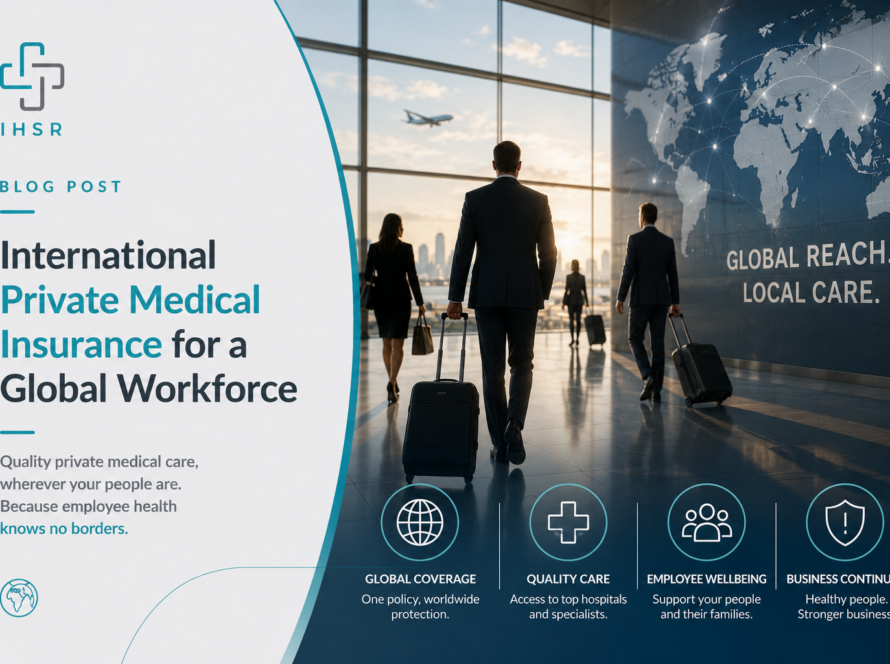
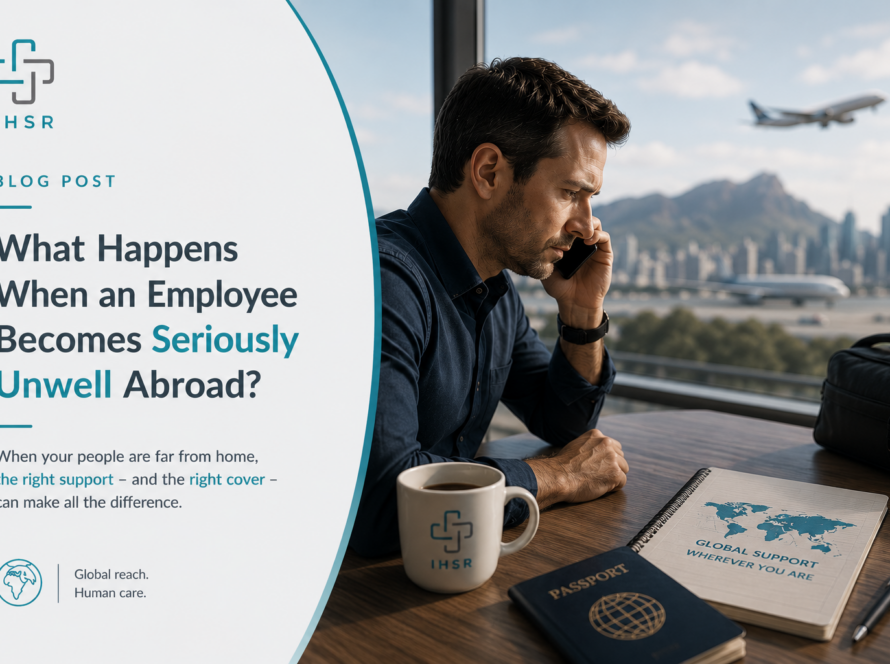
Risk management is sometimes approached as a process of identifying everything that could go wrong and then finding insurance to protect against it.
A stronger approach is to think about resilience.
Resilience asks a broader question:
If something goes wrong, how well can we respond, recover and continue?
For organisations operating internationally, this distinction is increasingly important.
Risk doesn’t stay in one category
An employee becoming seriously ill may initially appear to be a healthcare risk.
But if the employee is in a remote location, it can become an evacuation and logistics issue.
If the employee is critical to a project, it may become a business continuity issue.
Similarly, political unrest may initially appear to be a property risk.
But it can develop into a business interruption, employee safety, transport and supply-chain issue.
Risks are interconnected.
Understand the environment
A resilient risk strategy starts with understanding where the business operates. Consider:
- Healthcare infrastructure
- Political environment
- Security conditions
- Transport infrastructure
- Cross-border requirements
- Supply-chain dependencies
- Availability of specialist services
This is particularly important for businesses operating in remote areas.
Consider your people
People are one of the most important components of international operations.
- Where are employees located?
- Are they travelling?
- Are they expatriates?
- Are they working remotely?
- Are they contractors?
- Are family members accompanying them?
- What happens if they become ill or injured?
IHSR’s documented medical evacuation experience demonstrates that serious emergencies can occur in remote locations including Kariba, Victoria Falls, the Zambezi Valley, rural Zambia and Malawi.
Consider access to healthcare
The question isn’t simply whether a medical facility exists.
It is whether the facility can provide the treatment required.
The Kariba cardiac case demonstrates this distinction clearly: a patient required access to tertiary cardiac care that was located across a national border.
Consider political risk
Political risk is also becoming an increasingly prominent business concern.
Allianz’s 2026 Risk Barometer ranked political risks and violence seventh globally, its highest position to date.
Businesses should consider how political instability could affect:
- Assets
- Employees
- Transport
- Supply chains
- Business premises
- Business continuity
Build a response plan
Risk management should include practical contingency planning.
- What happens if an employee needs emergency treatment?
- Who coordinates the response?
- What happens if a business premises becomes inaccessible?
- Can employees work from another location?
- What happens if a supplier cannot deliver?
- How quickly can alternative arrangements be activated?
These questions are about resilience rather than insurance.
Then consider insurance
Once the risk has been understood, insurance can be considered as part of the overall strategy.
Depending on the exposure, this may include:
International Private Medical Insurance
For employees and individuals living or working internationally.
Travel Insurance
For specified risks associated with international business or leisure travel.
Medical Evacuation
For circumstances where appropriate treatment is not available locally and the clinical and policy requirements for evacuation are met.
Political Violence & Terrorism Insurance
For businesses with relevant exposure to specified political violence and terrorism risks.
Resilience is about preparation
The purpose of risk management isn’t to predict exactly what will happen.
No one can do that.
The purpose is to understand the scenarios that could materially affect the organisation and prepare appropriate responses.
Insurance can be an important part of that preparation.
But it works best when it sits alongside good planning, clear responsibilities, appropriate assistance arrangements and an understanding of the actual risk environment.
The IHSR perspective
For IHSR, this is ultimately what specialist insurance is about. Not simply placing a policy but rather:
- Understanding the person.
- Understanding the location.
- Understanding the operation.
- Understanding the potential consequences.
And then considering which risks can be managed, mitigated, retained or transferred.
The right insurance solution starts with understanding the risk.